The closest point method (CPM) is an embedding method for solving partial differential equations on surfaces. The closest point method uses standard numerical approaches such as finite differences, finite element or spectral methods in order to solve the embedding partial differential equation (PDE) which is equal to the original PDE on the surface. The solution is computed in a band surrounding the surface in order to be computationally efficient. In order to extend the data off the surface, the closest point method uses a closest point representation. This representation extends function values to be constant along directions normal to the surface. == Definitions == Closest Point function: Given a surface S , c p ( x ) {\displaystyle {\mathcal {S}},cp(\mathbf {x} )} refers to a (possibly non-unique) point belonging to S {\displaystyle {\mathcal {S}}} , which is closest to x {\displaystyle \mathbf {x} } [SE]. Closest point extension: Let S {\displaystyle {\mathcal {S}}} , be a smooth surface in R d {\displaystyle \mathbb {R} ^{d}} . The closest point extension of a function u : S → R {\displaystyle u:{\mathcal {S}}\rightarrow \mathbb {R} } , to a neighborhood Ω {\displaystyle \Omega } of S {\displaystyle {\mathcal {S}}} , is the function v : Ω → R {\displaystyle v:\Omega \rightarrow \mathbb {R} } , defined by v ( x ) = u ( c p ( x ) ) {\displaystyle v(\mathbf {x} )=u(cp(\mathbf {x} ))} . == Closest point method == Initialization consists of these steps [EW]: If it is not already given, a closest point representation of the surface is constructed. A computational domain is chosen. Typically this is a band around the surface. Replace surface gradients by standard gradients in R 3 {\displaystyle \mathbb {R} ^{3}} . Solution is initialized by extending the initial surface data on to the computational domain using the closest point function. After initialization, alternate between the following two steps: Using the closest point function, extend the solution off the surface to the computational domain. Compute the solution to the embedding PDE on a Cartesian mesh in the computational domain for one time step. == Banding == The surface PDE is extended into R 3 {\displaystyle \mathbb {R} ^{3}} however it is only necessary to solve this new PDE near the surface. Hence, we solve the PDE in a band surrounding the surface for efficient computational purposes. Ω c x : ‖ x − c p ( x ) ‖ 2 ≤ λ {\displaystyle \Omega _{c}{x:\|x-cp(x)\|_{2}\leq \lambda }} where λ {\displaystyle \lambda } is the bandwidth. == Example: Heat equation on a circle == Using initial profile u S ( θ , t ) = sin ( θ ) {\displaystyle u_{S}(\theta ,t)=\sin(\theta )} leads to the solution u S ( θ , t ) = exp ( − t ) sin ( θ ) {\displaystyle u_{S}(\theta ,t)=\exp(-t)\sin(\theta )} for the heat equation. Forward Euler time-stepping is used with relation Δ t = 0.1 Δ x 2 {\displaystyle \Delta t=0.1\Delta x^{2}} and degree-four interpolation polynomials for the interpolations. Second-order centered differences are used for the spatial discretization. The CPM results in the expected second order error in the solution u {\displaystyle u} . == Applications == The closest point method can be applied to various PDEs on surfaces. Reaction–diffusion problems on point clouds [RD], eigenvalue problems [EV], and level set equations [LS] are a few examples.
Socially assistive robot
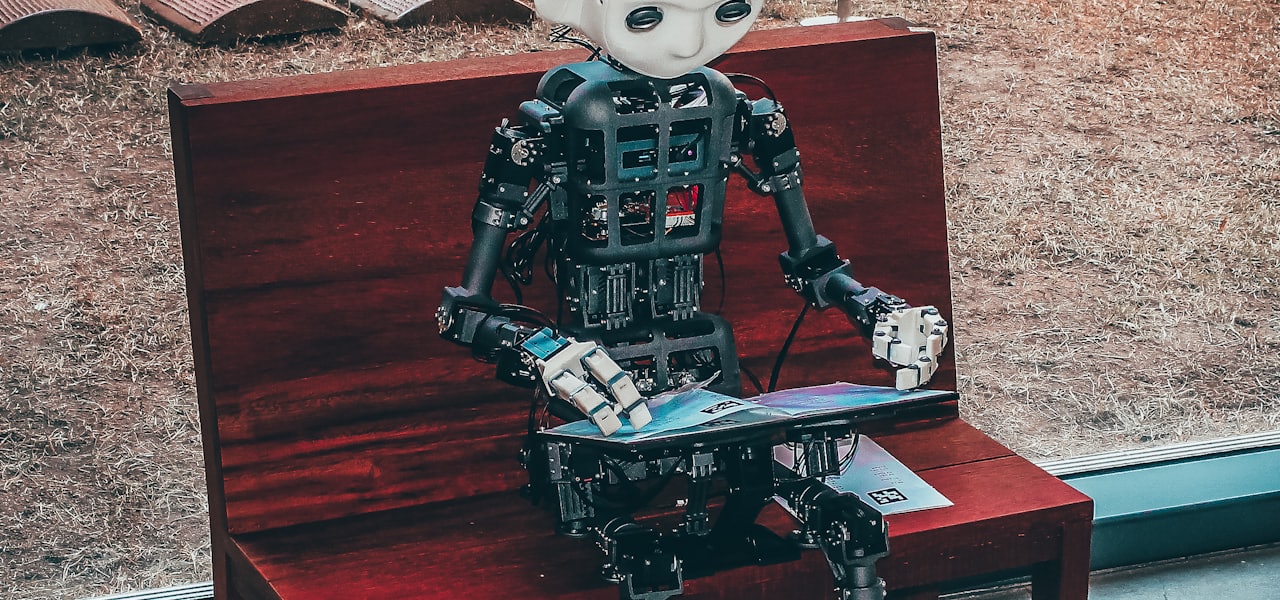
A socially assistive robot (SAR) aids users through social engagement and support rather than through physical tasks and interactions. == Background == The field of socially assistive robotics emerged in the early 2000s, following the emergence of the field of social robots. In contrast to social robots, SARs aid users with specific goals related to behavior change rather than serving as purely social entities. The term "Socially assistive robot" was initially defined by Maja Matarić and David Feil-Seifer in 2005. Since its inception, the field has gained substantial recognition, featuring numerous research projects, a wealth of global research publications, startup companies, and a growing array of products on the consumer market. The COVID-19 pandemic has underscored the immense potential of socially assistive robots, particularly in addressing the needs of large user populations, including children engaged in remote learning, elderly individuals grappling with loneliness, and those affected by social isolation and its associated negative consequences. == Characteristics of interaction == SARs rely on artificial intelligence (AI) to generate real-time, responsive, natural, and meaningful robot behaviors during interactions with humans. The robots employ various forms of communication, such as facial expressions, gestures, body movements, and speech. In contrast to robots intended for physical tasks, SARs are designed to support and motivate users to perform their own tasks. The tasks a user engages in can be physical (e.g., rehabilitation exercises for post-stroke users), cognitive (e.g., dementia screening for elderly users), or social (e.g., turn-taking for users with autism spectrum disorders). This complex interaction involves detecting and interpreting the user's movement, behavior, intent, goals, speech, and preferences. Machine learning and robot learning techniques are frequently employed to enhance the robot's understanding of the user, predict user preferences, and provide effective assistance. The effectiveness of socially assistive robots is assessed based on objective measurements of user performance and improvement resulting from the robot’s assistance and support. Unlike other branches of robotics, where effectiveness depends on the robot's physical task completion, SAR measures the success of the robot based on the user's progress and achievements. This evaluation is carried out using quantitative objective metrics, such as time spent on tasks, accuracy, retention, and verbalization, as well as quantitative subjective metrics, such as user survey tools. SAR is based on the large body of evidence showing that users tend to respond more positively to interactions with physical robots compared to interactions with screens. Interaction with physical robots also encourages users to learn and retain more information than screen-based interactions. This fundamental insight underlines why physical robots in SAR applications are more effective, as opposed to interactions solely involving screens, tablets, or computers. == Uses and applications == SARs have been developed and validated in a wide array of applications, including healthcare, elder care, education, and training. For example, SARs have been developed to support children on the autism spectrum in acquiring and practicing social and cognitive skills, to motivate and coach stroke patients throughout their rehabilitation exercises, monitoring individuals health (ex. fall detection), and to encourage elderly users to be more physically and socially active. There is a concern that technophobia and lack of trust in robots will pose a barrier to the effectiveness of SARs in older adults.
Cinema 4D
Cinema 4D is a 3D software suite developed by the German company Maxon. == Overview == As of R21, only a single version of Cinema 4D is available. It replaces all previous variants, including BodyPaint 3D, and includes all features of the past 'Studio' variant. With R21, all binaries were unified. There is no technical difference between commercial, educational, or demo versions. The difference is now only in licensing. 2014 saw the release of Cinema 4D Lite, which came packaged with Adobe After Effects Creative Cloud 2014. "Lite" acts as an introductory version, with many features withheld. This is part of a partnership between the two companies, where a Maxon-produced plug-in, called Cineware, allows any variant to create a seamless workflow with After Effects. The "Lite" variant is dependent on After Effects CC, needing the latter application running to launch, and is only sold as a package component included with After Effects CC through Adobe. Initially, Cinema 4D was developed for Amiga computers in the early 1990s, and the first three versions of the program were available exclusively for that platform. With v4, however, Maxon began to develop the application for Windows and Macintosh computers as well, citing the wish to reach a wider audience and the growing instability of the Amiga market following Commodore's bankruptcy. It was also released for BeOS. On Linux, Cinema 4D is available as a commandline rendering version. == Modules and older variants == From R12 to R20, Cinema 4D was available in four variants. A core Cinema 4D 'Prime' application, a 'Broadcast' version with additional motion-graphics features, 'Visualize,' which adds functions for architectural design and 'Studio,' which includes all modules. From Release 8 until Release 11.5, Cinema 4D had a modular approach to the application, with the ability to expand upon the core application with various modules. This ended with Release 12, though the functionality of these modules remains in the different flavors of Cinema 4D (Prime, Broadcast, Visualize, Studio) The old modules were: Advanced Render (global illumination/HDRI, caustics, ambient occlusion and sky simulation) BodyPaint 3D (direct painting on UVW meshes; now included in the core. In essence Cinema 4D Core/Prime and the BodyPaint 3D products are identical. The only difference between the two is the splash screen that is shown at startup and the default user interface.) Dynamics (for simulating soft body and rigid body dynamics) Hair (simulates hair, fur, grass, etc.) MOCCA (character animation and cloth simulation) MoGraph (Motion Graphics procedural modelling and animation toolset) NET Render (to render animations over a TCP/IP network in render farms) PyroCluster (simulation of smoke and fire effects) Prime (the core application) Broadcast (adds MoGraph2) Visualize (adds Virtual Walkthrough, Advanced Render, Sky, Sketch and Toon, data exchange, camera matching) Studio (the complete package) == Version history == == Use in industry == A number of films and related works have been modeled and rendered in Cinema 4D, including: == Cinebench == Cinebench is a cross-platform test suite which tests a computer's hardware capabilities. It can be used as a test for Cinema 4D's 3D modeling, animation, motion graphic and rendering performance on multiple CPU cores. The program "target[s] a certain niche and [is] better suited for high-end desktop and workstation platforms". Cinebench is commonly used to demonstrate hardware capabilities at tech shows to show a CPU performance, especially by tech YouTubers and review sites.
Alexis Spectral Data
Alexis Spectral Data is a software developed for colour matching processes that calculates from available spectral data the colour numbers used by computers to display colours on screen. It displays the colour for each spectral reflectance curve and records the calculated trichromatic values and colour numbers along with the spectral curves. This eliminates the need to scan the samples separately with a truecolour Scanner while creating the database. The spectral data can be introduced manually as a series of reflectance values at wavelengths measured in different standard illuminants with an arbitrary but fixed increment that must be kept for each spectral curve throughout the creation of the whole database. Therefore, older UV-VIS Spectrophotometers that can't be interfaced with computers can also be used for creating the database needed for colour matching. Alexis Spectral Data determines the whiteness degree in a less time-consuming method, which permits storage and easier handling of the obtained data. Alexis Spectral Data can export the trichromatic values, calculated from the spectral curves, to Alexis Analyser, software that handles only trichromatic data. The earliest information about the development of this software comes from a paper published by a student at the University Politehnica Bucharest in 1993. The software runs on Windows based computers but not on other operating systems.
Super-resolution imaging
Super-resolution imaging (SR) is a class of techniques that improve the resolution of an imaging system. In optical SR the diffraction limit of systems is transcended, while in geometrical SR the resolution of digital imaging sensors is enhanced. In some radar and sonar imaging applications (e.g. magnetic resonance imaging (MRI), high-resolution computed tomography), subspace decomposition-based methods (e.g. MUSIC) and compressed sensing-based algorithms (e.g., SAMV) are employed to achieve SR over standard periodogram algorithm. Super-resolution imaging techniques are used in general image processing and in super-resolution microscopy. == Super-resolution principles == Several concepts are fundamental to super-resolution imaging: Diffraction limit: the capacity of an optical instrument to reproduce the details of an object in an image has limits that are imposed by laws of physics: the diffraction equations in the wave theory of light, or the uncertainty principle for photons in quantum mechanics. Information transfer can never be increased beyond this boundary, but packets outside the limits can be cleverly swapped for (or multiplexed with) some inside it. Super-resolution microscopy does not so much “break” as “circumvent” the diffraction limit. New procedures probing electro-magnetic disturbances at the molecular level (in the so-called near field) remain fully consistent with Maxwell's equations. Spatial frequency domain: A succinct expression of the diffraction limit is given in the spatial frequency domain. In Fourier optics light distributions are expressed as superpositions of a series of grating light patterns in a range of fringe widths - these widths represent the spatial frequencies. It is generally taught that diffraction theory stipulates an upper limit, the cut-off spatial-frequency, beyond which pattern elements fail to be transferred into the optical image, i.e., are not resolved. But in fact what is set by diffraction theory is the width of the passband, not a fixed upper limit. No laws of physics are broken when a spatial frequency band beyond the cut-off spatial frequency is swapped for one inside it: this has long been implemented in dark-field microscopy. Nor are information-theoretical rules broken when superimposing several bands, disentangling them in the received image needs assumptions of object invariance during multiple exposures, i.e., the substitution of one kind of uncertainty for another. Information: When the term super-resolution is used in techniques based on the inference of object details using a statistical treatment of the image within standard resolution limits (for example, averaging multiple exposures), it involves an exchange of one kind of information (extracting signal from noise) for another (the assumption that the target has remained invariant). Recent breakthroughs incorporate quantum-transformer hybrids into super-resolution, such as QUIET‑SR, a 2025 model that employs shifted quantum window attention within a transformer to enhance image detail while respecting diffraction and information-theory limits Similarly, frequency-integrated transformers (e.g., FIT) enrich super-resolution by explicitly combining spatial and frequency-domain information via FFT-based attention, improving reconstruction across scales Resolution and localization: True resolution involves the distinction of whether a target, e.g. a star or a spectral line, is single or double, ordinarily requiring separable peaks in the image. When a target is known to be single, its location can be determined with higher precision than the image width by finding the centroid (center of gravity) of its image light distribution. The word ultra-resolution had been proposed for this process but it did not catch on, and the high-precision localization procedure is typically referred to as super-resolution. == Techniques == === Optical or diffractive super-resolution === Substituting spatial-frequency bands: Though the bandwidth allowable by diffraction is fixed, it can be positioned anywhere in the spatial-frequency spectrum. Dark-field illumination in microscopy is an example. See also aperture synthesis. ==== Multiplexing spatial-frequency bands ==== An image is formed using the normal passband of the optical device. Then, some known light structure (for example, a set of light fringes) is superimposed on the target. The image now contains components resulting from the combination of the target and the superimposed light structure, e.g. moiré fringes, and carries information about target detail which simple unstructured illumination does not. The “superresolved” components, however, need disentangling to be revealed. For an example, see structured illumination (figure to left). ==== Multiple parameter use within traditional diffraction limit ==== If a target has no special polarization or wavelength properties, two polarization states or non-overlapping wavelength regions can be used to encode target details, one in a spatial-frequency band inside the cut-off limit the other beyond it. Both would use normal passband transmission but are then separately decoded to reconstitute target structure with extended resolution. ==== Probing near-field electromagnetic disturbance ==== Super-resolution microscopy is generally discussed within the realm of conventional optical imagery. However, modern technology allows the probing of electromagnetic disturbance within molecular distances of the source, which has superior resolution properties. See also evanescent waves and the development of the new super lens. === Geometrical or image-processing super-resolution === ==== Multi-exposure image noise reduction ==== When an image is degraded by noise, the resolution may be improved by averaging multiple exposures. See example on the right. ==== Single-frame deblurring ==== Known defects in a given imaging situation, such as defocus or aberrations, can sometimes be mitigated in whole or in part by suitable spatial-frequency filtering of even a single image. Such procedures all stay within the diffraction-mandated passband, and do not extend it. ==== Sub-pixel image localization ==== The location of a single source can be determined by computing the "center of gravity" (centroid) of the light distribution extending over several adjacent pixels (see figure on the left). Provided that there is enough light, this can be achieved with arbitrary precision, very much better than pixel width of the detecting apparatus and the resolution limit for the decision of whether the source is single or double. This technique, which requires the presupposition that all the light comes from a single source, is at the basis of what has become known as super-resolution microscopy, e.g. stochastic optical reconstruction microscopy (STORM), where fluorescent probes attached to molecules give nanoscale distance information. It is also the mechanism underlying visual hyperacuity. ==== Bayesian induction beyond traditional diffraction limit ==== Some object features, though beyond the diffraction limit, may be known to be associated with other object features that are within the limits and hence contained in the image. Then conclusions can be drawn, using statistical methods, from the available image data about the presence of the full object. The classical example is Toraldo di Francia's proposition of judging whether an image is that of a single or double star by determining whether its width exceeds the spread from a single star. This can be achieved at separations well below the classical resolution bounds, and requires the prior limitation to the choice "single or double?" The approach can take the form of extrapolating the image in the frequency domain, by assuming that the object is an analytic function, and that we can exactly know the function values in some interval. This method is severely limited by the ever-present noise in digital imaging systems, but it can work for radar, astronomy, microscopy or magnetic resonance imaging. More recently, a fast single image super-resolution algorithm based on a closed-form solution to ℓ 2 − ℓ 2 {\displaystyle \ell _{2}-\ell _{2}} problems has been proposed and demonstrated to accelerate most of the existing Bayesian super-resolution methods significantly. == Aliasing == Geometrical SR reconstruction algorithms are possible if and only if the input low resolution images have been under-sampled and therefore contain aliasing. Because of this aliasing, the high-frequency content of the desired reconstruction image is embedded in the low-frequency content of each of the observed images. Given a sufficient number of observation images, and if the set of observations vary in their phase (i.e. if the images of the scene are shifted by a sub-pixel amount), then the phase information can be used to separate the aliased high-frequency content from the true low-frequency content, and the full-resolution image can be accurate
Multimedia database
A Multimedia database (MMDB) is a collection of related for multimedia data. The multimedia data include one or more primary media data types such as text, images, graphic objects (including drawings, sketches and illustrations) animation sequences, audio and video. A Multimedia Database Management System (MMDBMS) is a framework that manages different types of data potentially represented in a wide diversity of formats on a wide array of media sources. It provides support for multimedia data types, and facilitate for creation, storage, access, query and control of a multimedia database. == Contents of MMDB == A Multimedia Database (MMDB) hosts one or more multimedia data types (i.e. text, images, graphic objects, audio, video, animation sequences). These data types are broadly categorized into three classes: Static media (time-independent: image and graphic object). Dynamic media (time-dependent: audio, video and animation). Dimensional media(3D game and computer aided drafting programs). === Comparison of multimedia data types === Additionally, a Multimedia Database (MMDB) needs to manage additional information pertaining to the actual multimedia data. The information is about the following: Media data: the actual data representing an object. Media format data: information about the format of the media data after it goes through the acquisition, processing, and encoding phases. Media keyword data: the keyword descriptions, usually relating to the generation of the media data. Media feature data: content dependent data such as contain information about the distribution of colours, the kinds of textures and the different shapes present in an image. The last three types are called metadata as they describe several different aspects of the media data. The media keyword data and media feature data are used as indices for searching purpose. The media format data is used to present the retrieved information. == Requirements of Multimedia databases == Like the traditional databases, Multimedia databases should address the following requirements: Integration Data items do not need to be duplicated for different programs invocations Data independence Separate the database and the management from the application programs Concurrency control Allows concurrent transactions Persistence Data objects can be saved and re-used by different transactions and program invocations Privacy Access and authorization control Integrity control Ensures database consistency between transactions Recovery Failures of transactions should not affect the persistent data storage Query support Allows easy querying of multimedia data Multimedia databases should have the ability to uniformly query data (media data, textual data) represented in different formats and have the ability to simultaneously query different media sources and conduct classical database operations across them. (Query support) They should have the ability to retrieve media objects from a local storage device in a good manner. (Storage support) They should have the ability to take the response generated by a query and develop a presentation of that response in terms of audio-visual media and have the ability to deliver this presentation. (Presentation and delivery support) == Issues and challenges == Multimedia data consists of a variety of media formats or file representations including TIFF, BMP, PPT, IVUE, FPX, JPEG, MPEG, AVI, MID, WAV, DOC, GIF, EPS, PNG, etc. Because of restrictions on the conversion from one format to the other, the use of the data in a specific format has been limited as well. Usually, the data size of multimedia is large such as video; therefore, multimedia data often require a large storage. Multimedia database consume a lot of processing time, as well as bandwidth. Some multimedia data types such as video, audio, and animation sequences have temporal requirements that have implications on their storage, manipulation and presentation, but images, video and graphics data have special constraints in terms of their content. == Application areas == Examples of multimedia database application areas: Digital Libraries News-on-Demand Video-on-Demand Music database Geographic Information Systems (GIS) Telemedicine
List of speech recognition software
Speech recognition software is available for many computing platforms, operating systems, use models, and software licenses. Here is a listing of such, grouped in various useful ways. == Acoustic models and speech corpus (compilation) == The following list presents notable speech recognition software engines with a brief synopsis of characteristics. == Macintosh == == Cross-platform web apps based on Chrome == The following list presents notable speech recognition software that operate in a Chrome browser as web apps. They make use of HTML5 Web-Speech-API. == Mobile devices and smartphones == Many mobile phone handsets, including feature phones and smartphones such as iPhones and BlackBerrys, have basic dial-by-voice features built in. Many third-party apps have implemented natural-language speech recognition support, including: == Windows == === Windows built-in speech recognition === The Windows Speech Recognition version 8.0 by Microsoft comes built into Windows Vista, Windows 7, Windows 8 and Windows 10. Speech Recognition is available only in English, French, Spanish, German, Japanese, Simplified Chinese, and Traditional Chinese and only in the corresponding version of Windows; meaning you cannot use the speech recognition engine in one language if you use a version of Windows in another language. Windows 7 Ultimate and Windows 8 Pro allow you to change the system language, and therefore change which speech engine is available. Windows Speech Recognition evolved into Cortana (software), a personal assistant included in Windows 10. === Windows 7, 8, 10, 11 third-party speech recognition === Braina – Dictate into third party software and websites, fill web forms and execute vocal commands. Dragon NaturallySpeaking from Nuance Communications – Successor to the older DragonDictate product. Focus on dictation. 64-bit Windows support since version 10.1. Tazti – Create speech command profiles to play PC games and control applications – programs. Create speech commands to open files, folders, webpages, applications. Windows 7, Windows 8 and Windows 8.1 versions. Voice Finger – software that improves the Windows speech recognition system by adding several extensions to it. The software enables controlling the mouse and the keyboard by only using the voice. It is especially useful for aiding users to overcome disabilities or to heal from computer injuries. === Microsoft Speech API === The first version of the Microsoft Speech API was released for Windows NT 3.51 and Windows 95 in 1995, it was then part of Windows up to Windows Vista. This initial version already contained Direct Speech Recognition and Direct Text To Speech APIs which applications could use to directly control engines, as well as simplified 'higher-level' Voice Command and Voice Talk APIs. Speech recognition functionality included as part of Microsoft Office and on Tablet PCs running Microsoft Windows XP Tablet PC Edition. It can also be downloaded as part of the Speech SDK 5.1 for Windows applications, but since that is aimed at developers building speech applications, the pure SDK form lacks any user interface (numerous applications were available), and thus is unsuitable for end users. == Built-in software == Microsoft Kinect includes built-in software which allows speech recognition of commands. Older generations of Nokia phones like Nokia N Series (before using Windows 7 mobile technology) used speech-recognition with family names from contact list and a few commands. Siri, originally implemented in the iPhone 4S, Apple's personal assistant for iOS, which uses technology from Nuance Communications. Cortana (software), Microsoft's personal assistant built into Windows Phone and Windows 10. == Interactive voice response == The following are interactive voice response (IVR) systems: CSLU Toolkit Genesys HTK – copyrighted by Microsoft, but allows altering software for licensee's internal use LumenVox ASR Tellme Networks; acquired by Microsoft == Unix-like x86 and x86-64 speech transcription software == Janus Recognition Toolkit (JRTk) Mozilla DeepSpeech was developing an open-source Speech-To-Text engine based on Baidu's deep speech research paper. Weesper Neon Flow – professional voice-dictation software that provides offline speech-to-text processing on macOS and Windows using local AI models. It is not open source and offers a paid subscription after a 15‑day free trial. Vocalinux – open-source speech transcription software for Linux. == Discontinued software == IBM VoiceType (formerly IBM Personal Dictation System) IBM ViaVoice – Embedded version still maintained by IBM. No longer supported for versions above Windows Vista. Untested above macOS 10.4 or on Macintoshes with an Intel chipset. Quack.com; acquired by AOL; the name has now been reused for an iPad search app. SpeechWorks from Nuance Communications. Yap Speech Cloud – Speech-to-text platform acquired by Amazon.com.